
What Happens to Hospital Linens After Pickup? Inside the Healthcare Laundry Process
Most people don’t think much about what happens to a hospital pillowcase after it leaves a patient room. But for infection prevention teams, facility managers, and healthcare administrators, that journey matters quite a bit.
Hospital linens pass through a lot of hands and a lot of steps before they make it back to patient rooms, exam areas, and operating departments. When items leave a healthcare facility, they enter a process built around hygiene, consistency, and accountability. It’s not always visible to the people who rely on it most, and that’s exactly why it’s worth understanding.
At CORE Linen Service, we think transparency about that process is important. Every step of the linen journey is structured around safety and operational discipline, because the details that happen off-site have a direct impact on patient care.
The Journey Begins at Collection
The process starts when soiled linens are removed from patient care areas and prepared for pickup. Healthcare facilities follow clear internal protocols for gathering used textiles so they can be transported safely to the laundry provider.
Once linens are collected, transportation plays an important role in maintaining separation between used and clean items. Healthcare laundry providers must handle these materials carefully to ensure the integrity of the sanitation process.
When items arrive at the processing facility, they enter a controlled workflow designed specifically for healthcare environments.
Controlled Handling at the Processing Facility
The first priority inside a healthcare laundry plant is safe handling of incoming materials. At CORE Linen Service, linen handling procedures follow strict operational protocols designed for healthcare environments.
One important method used in this process is lot segregation. This approach keeps linen batches separated during handling and processing. Maintaining separation helps ensure items move through the system in a controlled manner and supports hygiene standards throughout the laundering cycle.
This stage also prepares linens for the next step: professional washing designed to meet healthcare requirements.
Professional Washing Designed for Healthcare Textiles
Hospital textiles require more than routine cleaning. They must be processed in a way that supports hygiene and infection prevention expectations within medical environments.
Healthcare laundry services rely on specialized washing procedures that use controlled temperatures, detergents, and sanitation practices appropriate for medical textiles. These processes are monitored closely to ensure consistency and effectiveness.
Facilities that partner with CORE Linen Service benefit from decades of healthcare-focused experience. Since 1991, CORE has developed standardized operational procedures designed specifically for the demands of healthcare linen processing.
Advanced processing technologies support this work by maintaining consistency across large volumes of textiles while protecting the quality of the fabrics themselves.
Inspection and Quality Assurance
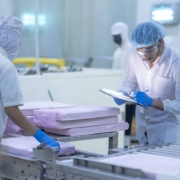
After washing and drying, linens move through inspection and finishing stages. This step ensures that only items meeting quality standards return to healthcare facilities.
During inspection, teams review textiles for issues such as:
- Visible wear or damage
- Stains that did not lift during washing
- Irregularities that affect appearance or performance
Items that do not meet quality expectations are removed from circulation. The remaining linens are folded and prepared for packaging so they are ready for safe distribution back to medical facilities.
This stage plays an important role in maintaining consistent linen quality across hospitals and clinical environments.
Preparing Linens for Safe Return
Once linens pass inspection, they are packaged and organized for delivery. Healthcare laundry providers must protect clean textiles during this stage so they remain safe during transport.
Standardized operational procedures guide this part of the process. Clean items are handled separately from incoming materials, and workflows are structured to maintain hygienic conditions throughout the facility.
These procedures help ensure that linens return to hospitals ready for immediate use.
Certifications That Support Healthcare Standards
Healthcare organizations rely on external verification to confirm that laundry processes meet recognized sanitation and operational standards. CORE Linen Service holds both Hygienically Clean certification and HLAC accreditation, demonstrating that our processes align with established healthcare laundry requirements.
These certifications confirm that handling procedures, washing practices, and quality controls meet rigorous industry expectations. CORE also aligns with LEED sustainability standards, reflecting our commitment to responsible resource management while maintaining high hygiene standards.
These certifications provide healthcare leaders with confidence that their linen partner operates under recognized quality benchmarks.
Consistency Matters in Healthcare Laundry Services
Every hospital depends on linens every day. Patient comfort, infection prevention, and operational efficiency all rely on a dependable supply of properly processed textiles.
Healthcare laundry services therefore require more than washing equipment. They require structured workflows, controlled environments, and teams trained to handle medical textiles responsibly.
CORE Linen Service emphasizes consistent hygiene and safety practices at every stage of the process. Our standardized procedures help ensure that each load of linen moves through the system with the same level of attention and care.
Confidence Through Process Transparency With CORE!
At CORE Linen Service, we believe transparency builds trust. Our healthcare-focused processes support hospitals, clinics, and medical facilities that rely on dependable linen programs every day.
If your facility would like to learn more about how professional healthcare laundry services operate behind the scenes, contact CORE Linen Service to discuss how our certified processes support safe and reliable linen management.