
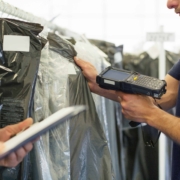
How to Combat Linen Loss: The Impact of RFID Linen Tracking on the Healthcare Industry
Linen loss is one of the most persistent and least visible drains on hospital budgets. Sheets, blankets, gowns, and towels leave circulation every day, often without clear explanation. Over time, those losses force hospitals to spend more on replacements, inflate par levels, and absorb costs that never show up as a single line item. For large health systems, the financial impact can be significant.
For CFOs and Materials Managers, this problem sits at the intersection of cost control and operational oversight. Traditional inventory methods struggle to explain where linens go once they leave central distribution. That is why RFID-enabled healthcare linen management has become an important tool for hospitals looking to regain financial control.
At CORE Linen Service, RFID technology supports transparency by turning linen movement into measurable data that hospital leaders can actually act on.
Why Linen Loss Is So Hard to Track
Linen shrinkage rarely comes from one cause. Loss happens in small increments across many departments, shifts, and workflows. Items may be discarded accidentally with red bag waste. Units may overstock closets “just in case.” Linens may leave the building with patient transfers or emergency transport and never return.
Without tracking, these losses blend into daily operations. Materials teams see higher replacement orders, but they cannot identify the source. Finance teams see rising costs, but they lack evidence to correct behavior. The result is ongoing overspend without a clear fix.
RFID changes that dynamic by introducing visibility where none existed before.
How RFID Supports Smarter Healthcare Linen Management
RFID works by assigning a unique identifier to individual linen items. That identifier allows systems to record when and where items move through key points in the hospital and laundry cycle. Over time, this data creates a clear picture of usage, dwell time, and disappearance patterns.
Instead of asking why linen costs keep rising, leaders can answer more precise questions:
- Which units lose the most items
- How often linens exit through red bag disposal
- Where inventory sits unused for long periods
- How transfer activity affects overall loss
This level of insight turns linen management from guesswork into informed decision making.
Identifying the Real Sources of Shrinkage
One of the biggest benefits of RFID is its ability to separate perception from reality. Many hospitals assume theft drives linen loss, but data often tells a different story.
RFID reporting frequently shows that loss occurs through:
- Accidental disposal with regulated medical waste
- Stockpiling in closets that disrupts circulation
- Untracked movement during patient transfers
- Improper return paths from procedural areas
By identifying the dominant causes, hospitals can address behavior and process gaps rather than increasing budgets year after year.
Financial Impact Goes Beyond Replacement Costs
Linen loss affects more than purchasing budgets. When inventory disappears, hospitals often respond by raising par levels. That decision ties up capital in extra textiles, increases storage needs, and places more strain on processing volume.
Linen reinjection (replacement) typically accounts for more than 20% of a provider’s linen supply expense. When replacement costs exceed the 20% industry standard, it signals opportunities for improved loss management and behavioral change.
RFID-enabled healthcare linen management helps reverse that cycle. When leaders know where linens are and how long they remain in use, they can set realistic par levels and reduce unnecessary overbuying. Lower replacement rates and tighter inventory control support stronger financial forecasting.
For CFOs, this means fewer surprises. For Materials Managers, it means control instead of reaction.
Using Data to Change Behavior, Not Just Track It
RFID data becomes most valuable when hospitals use it to guide operational change. Reports can highlight departments with unusual loss patterns or excessive dwell times. Education and policy adjustments then target the real problem areas.
Instead of broad restrictions or blanket replacement cuts, leadership can apply focused solutions such as:
- Red bag disposal training in high-loss units
- Revised linen return procedures for transport teams
- Closet audits to reduce hoarding
- Department-specific par adjustments
These changes improve accountability without disrupting care delivery.
Why RFID Works Best with an Experienced Partner
Technology alone does not solve linen loss. RFID systems require interpretation, context, and collaboration to deliver results. Hospitals benefit most when RFID data is supported by a partner who understands healthcare operations and linen workflows.
CORE Linen Service integrates RFID as part of a broader healthcare approach. The goal is not surveillance, but clarity. Data supports conversations between finance, materials management, EVS, and clinical leadership. Everyone works from the same facts instead of assumptions.
This alignment helps hospitals treat linen as the valuable asset it is.
Long-Term Value for Large Health Systems
For major hospital systems, small improvements scale quickly. Even modest reductions in linen loss can translate into significant annual savings across multiple facilities. RFID-driven healthcare linen management provides the structure needed to sustain those gains.
Over time, hospitals benefit from:
- Lower replacement spend
- More accurate budgeting
- Improved inventory circulation
- Stronger cross-department accountability
These outcomes support both financial stability and operational efficiency.
Turning Linen from a Cost Center into a Managed Asset
Linen does not disappear overnight, and the solution is rarely simple. However, hospitals no longer need to accept loss as unavoidable. RFID tracking provides the visibility required to understand where problems originate and how to fix them.
If your health system is struggling with unexplained linen loss and rising replacement costs, our team is ready to help. Contact CORE Linen Service to learn how RFID-enabled healthcare linen management can bring clarity, control, and long-term savings back to your organization.